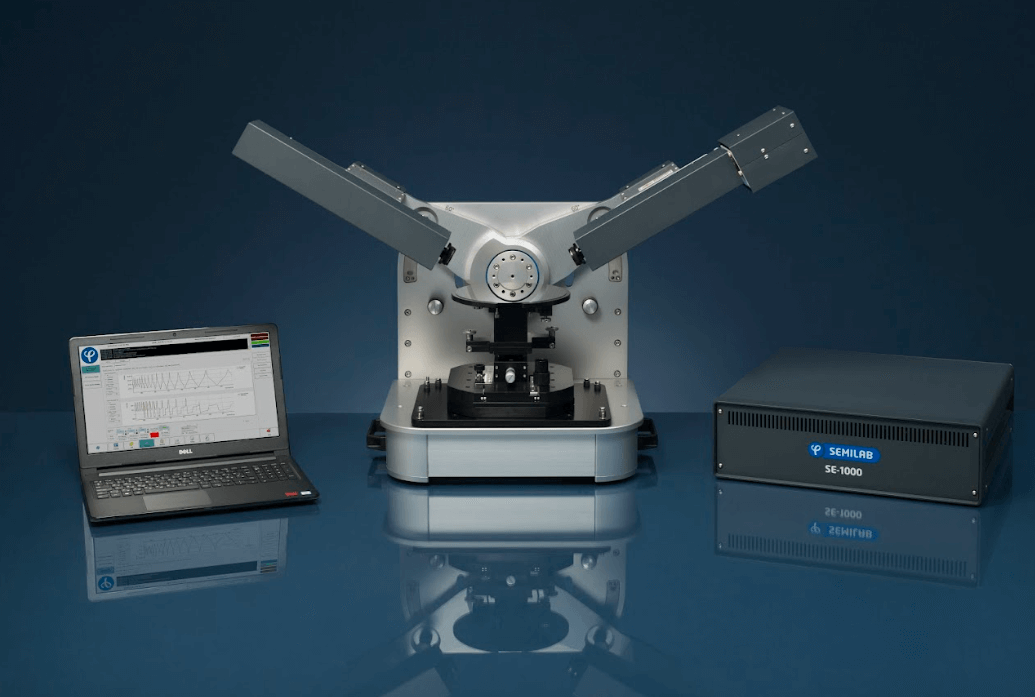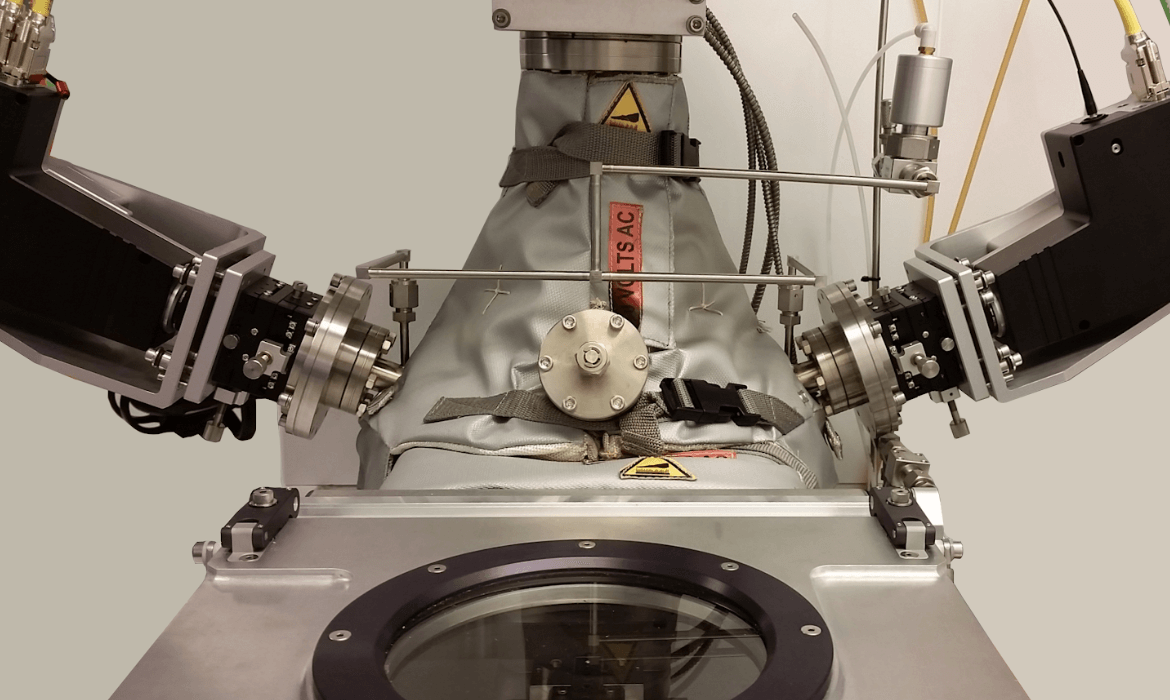
In2O3 is the parent oxide semiconductor for many transparent conducting oxides owing to its comparatively wide band gap and reasonable conductivity. The ability to fabricate thin films of In2O3 utilising simple and cheap solution-processed methods has made it appealing for applications in displays and solar cells. However, to optimise and improve the optoelectronic properties of these films and enable scalability, understanding the fundamentals behind the solution chemistry is essential and often overlooked. Current research highlights the use of stabilisers to maintain the solution over time and facilitate the formation of strong M–O–M bonds but rarely delves into the underlying chemistry or discusses the effect of varying the stabiliser concentration. This paper explores the impact on the quality of In2O3 thin films when altering the concentration of monoethanolamine used as a stabiliser. UV-visible and infrared spectroscopy are employed to track changes to the solution over time to explore the role of the stabiliser. In parallel, thin films prepared from solutions at different time points were characterised using X-ray photoelectron spectroscopy, atomic force microscopy, and ellipsometry. Through this approach, changes in the solution can be directly correlated to thin-film characteristics, crucial for their use in electronic applications.